 Another update from the Jungle….
Danny is interviewing for a new job, and the question he dreads most has just been asked. Why did he leave his last job? Danny stares at the in-house recruiter of his prospective employer and thinks back to his former job.
Danny is a young salesman, bright and energetic. He was hired straight out of college into his dream job. He thought his former boss, Sam, was his friend because they talked about sports when they weren’t talking about business.
 They often hung out at a sports bar after work watching sports events. They also called and texted each other about games they were watching during the weekend. Unfortunately, Danny hadn’t made the mental transition from college buddies to business colleagues.
He learned this hard lesson during March Madness. Danny hosted a party for some of his college frat brothers. Since he was hosting his own party, he couldn’t attend Sam’s party for colleagues and clients.
 As the game progressed, Danny called Sam to discuss the latest score and joke about some of the action. But Danny was drinking heavily and jokes that amuse frat brothers don’t necessarily amuse a boss, particularly a boss trying to entertain his own guests. After the tenth call in as many minutes, Sam ordered Danny to not call him again. Danny laughed drunkenly and agreed. A few minutes later, he called Sam again. Sam hung up and turned off his phone.
 The next day, Danny was met at the office by an HR rep who explained that getting drunk and making harassing phone calls to a boss was inappropriate. She informed Danny that he could resign and receive a severance package or he could be fired. Danny chose the first option and returned home to nurse his hangover.
This sorry sequence of events flits through Danny’s mind as he stares at the in-house recruiter. What are Danny’s options?
- He can admit that he got drunk, showed poor judgment, and was invited to be successful elsewhere.
- He can trash his former employer as a rotten place to work.
- He can say that his former employer wasn’t a good “fit” or that he is looking for a new challenge.
 In the actual situation, the young employee was given a few coaching tips during his exit interview, regarding appropriate behavior outside the office. It’s always a good idea to add a segment in the on-boarding process to remind new hires that what they do on their own time can negatively affect their employment.
If your company is struggling with HR issues, Corporate Compliance Risk Advisor can help you create HR policies that are appropriate for your company’s size and then serve as a resource to your staff as the policies are implemented.
Join the HR Compliance Jungle today. Click here!













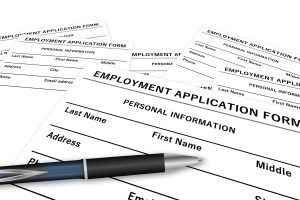 Finding the “right” employee is one of the most difficult tasks for any company. There will always be job applicants with the skills and expertise required for the job. But will the new hire fit in well with the existing team? A technically skilled person is so much dross if she or he has a toxic personality that destroys team morale.
 In World War II, U-boat captain Peter “Ali” Cremer was concerned about how new crew members would fit in with his existing crew. U-boats were claustrophobically tiny. There was no privacy and no room to separate crewmen if a dispute arose. Meanwhile, U-boats took weeks-long patrols looking for Allied convoys and risking enemy attacks.
 At the same time, Cremer was consistent in his approach to the job (i.e., his corporate culture). Every crew member was treated with respect and discipline was enforced the same for everyone. No unnecessary risks were taken with the boat or the crew. Across the fleet, every U-boater knew that Cremer always brought his crew back alive. That was important since only 10% of U-boaters survived the war.
 For more information about Peter Cremer, check out his memoirs
 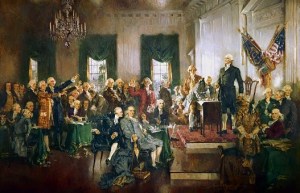 Building a successful team is never easy. Managers and business owners who hire “yes-men” tend to ride their egos and a false consensus to financial ruin. On the other hand, having too many different opinions can paralyze decision-making and cause companies to fall apart. What should an intelligent manager or business owner do?
 Hamilton wanted a strong central government and an industrialized economy. Jefferson wanted a weak central government with most power residing with the states and an economy based on agriculture. These conflicting visions of America are as strong today as they were over 200 years ago.
 Washington kept his feuding Cabinet members functioning as a team, and he did it while building the political structure of the U.S. from scratch. The traditions we esteem today were created by Washington to work around the political battles in his Cabinet and with the leaders of Congress.
 Building a functioning team means having calm, assertive leadership that listens to all viewpoints before making a final decision. Washington was one of the best at it.
 If your company is struggling with HR issues, Corporate Compliance Risk Advisor can help you create HR policies that are appropriate for your company’s size and then serve as a resource to your staff as the policies are implemented.
 Amber sits at her desk sorting through paperwork when Tom walks in and slumps in the chair across from her. Amber is the HR director for a company that provides transportation services for musical acts. Tom is one of the bus drivers. He stops by to give Amber an update about his recent month-long trip driving a rockabilly band around Texas.
 professional contract. The tour was to build buzz about their new album. The band members were as excited as school children, staring out the windows as the passing scenery. At the first roadhouse, they leaped off the bus, grabbed their instruments, and prepared to sing.
 Between performances, the band decided to explore the bars on the Riverwalk. Later no one could remember exactly what they did but they all agreed they had a great time. Then they got back on the bus for the next leg of the tour.
 landscape. One day, after several minutes of staring, Denver asked where they are. Tom was as tired of the road as the band. Without taking his eyes off the road, he replied to Denver, “What difference does it make to you? When the bus stops, you’ll get off and play. Until then, shut up and go sit down”.








 HR Compliance Jungle